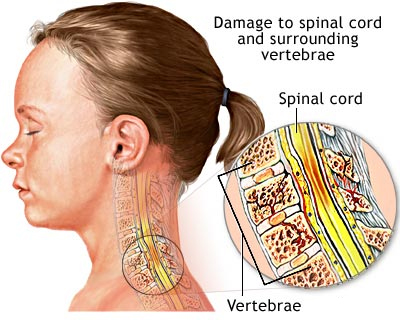
The spine is divided into several sections.
- The first 7 bones are the cervical vertebrae which make up the neck.
- The next 12 bones are the thoracic vertebrae which is the chest section which has the ribs attached.
- The next 5 bones are the lumbar vertebrae which are the lower part of the back.
- The sacral vertebrae are the next 4 bones which are all fused together and are caged within the bones of the pelvis.
- The final bone of the spine is the coccyx, known as the tail bone.

Injury to the spinal cord can cause serious and long-term problems, depending on the area involved, including:
- loss of feeling in the hands and/or legs
- paralysis (inability
to move)
- paraplegia is inability to move from the waist down and is caused by injury to the lower cervical spine, lumbar, or thoracic vertebrae.
- quadraplegia is inability to move from the neck down (including arms and legs) and is casued by injury to the cervial spine.
- loss of movement and voluntary control over the muscles in the body
- loss of reflex function below the point of injury, causing disruption
of bodily functions such as:
- breathing (damage to the upper cervical spine),
- bowel control, and
- bladder control.
In the event of a suspected spinal injury, call for emergency help by dialing 9-1-1 and take steps to prevent the person from moving until he or she can be fully immobilized by trained medical personnel. The smallest movement can mean the difference between a full recovery and a lifetime of paralysis.